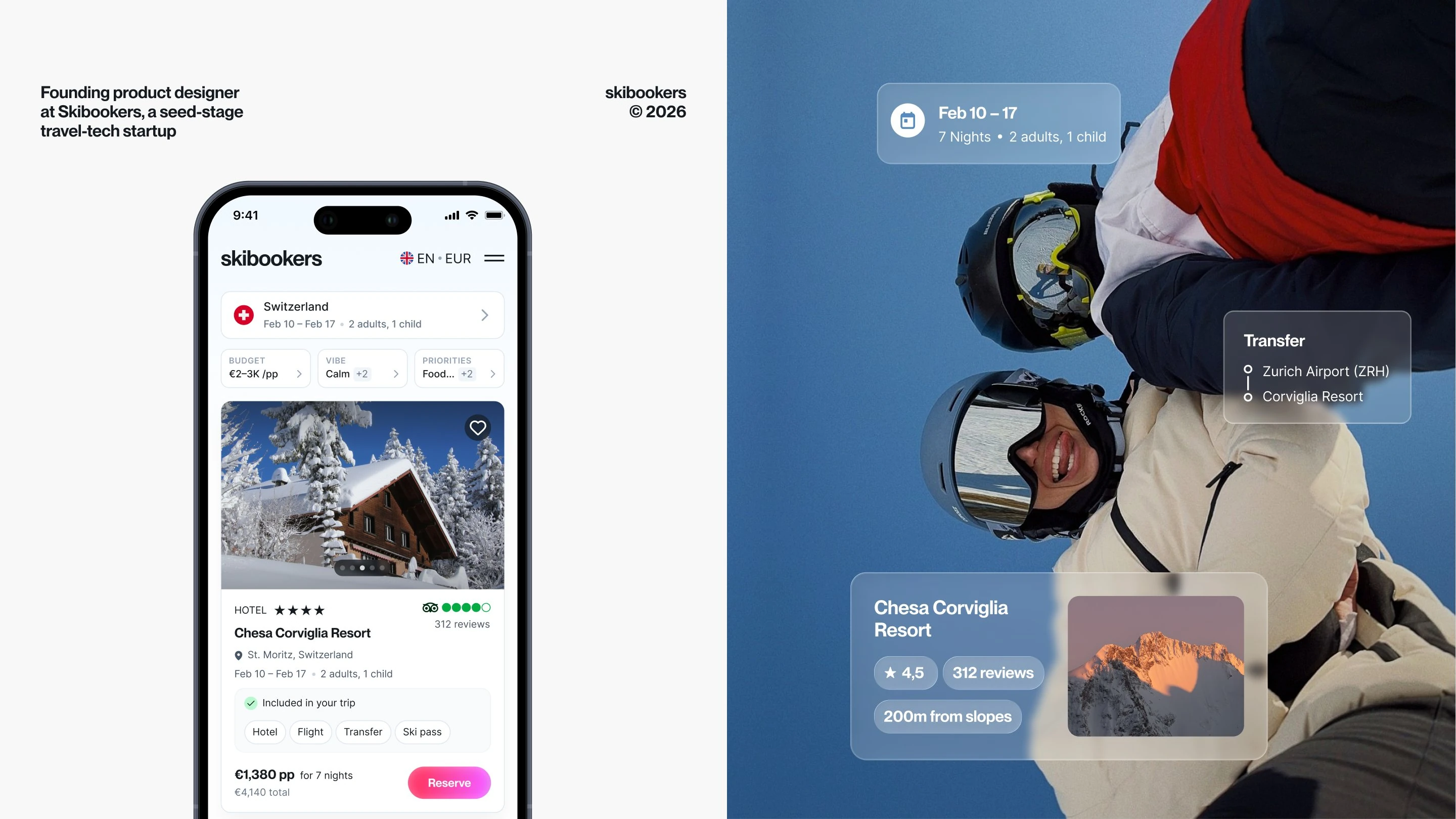
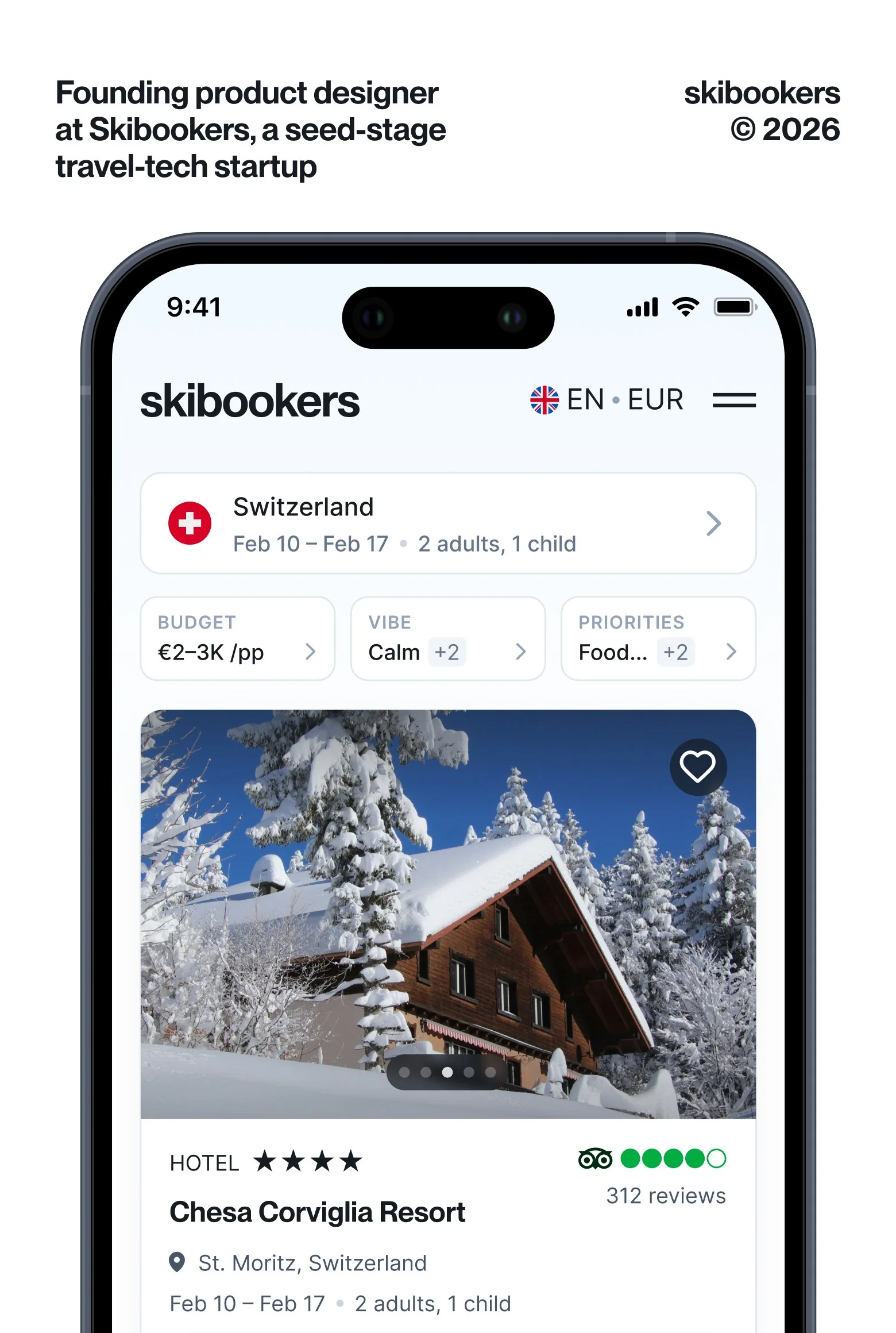

Skibookers is an AI-powered platform for planning and booking ski trips end-to-end
A seed-stage travel-tech startup competing with the classic OTA model (Booking or Expedia). The business bet was on a smart recommendation system powered by the parent company's data about ski travellers.
This case is about how the core product bet broke under real users, and how I reframed the product without giving up its positioning.
Role
Founding Senior Product Designer
Timeline:
July 2025 → April 2026
Deliverables
Core user flow from 0 to launch, design system, multi-step quiz with gamification, landing page, brand identity. Mobile & desktop
Team
CEO, CTO, frontend and backend engineers, PM (last 3 months only)
Contents
1.1 Business context
The CEO's earlier research suggested users would spend up to 10 minutes on onboarding if the perceived value was high enough*.
Parent company's data: 1.6M+ customers, 584 ski resorts. Operational data could power an AI-native recommendation layer.
The OTA model is saturating. AI-first travel players are emerging (Mindtrip, $22M Series A), and big players are adapting (Expedia in ChatGPT, TripAdvisor AI Planner)
*We validated this with our own user testing (see Appendix)
1.2 Team setup and timelines

+3
Product team
Scope to build
Quiz
Offer & Booking Flow
Brand
Design-system

The bet was that the recommendation engine could be confident enough to skip comparison: one ideal trip, one CTA, one click.
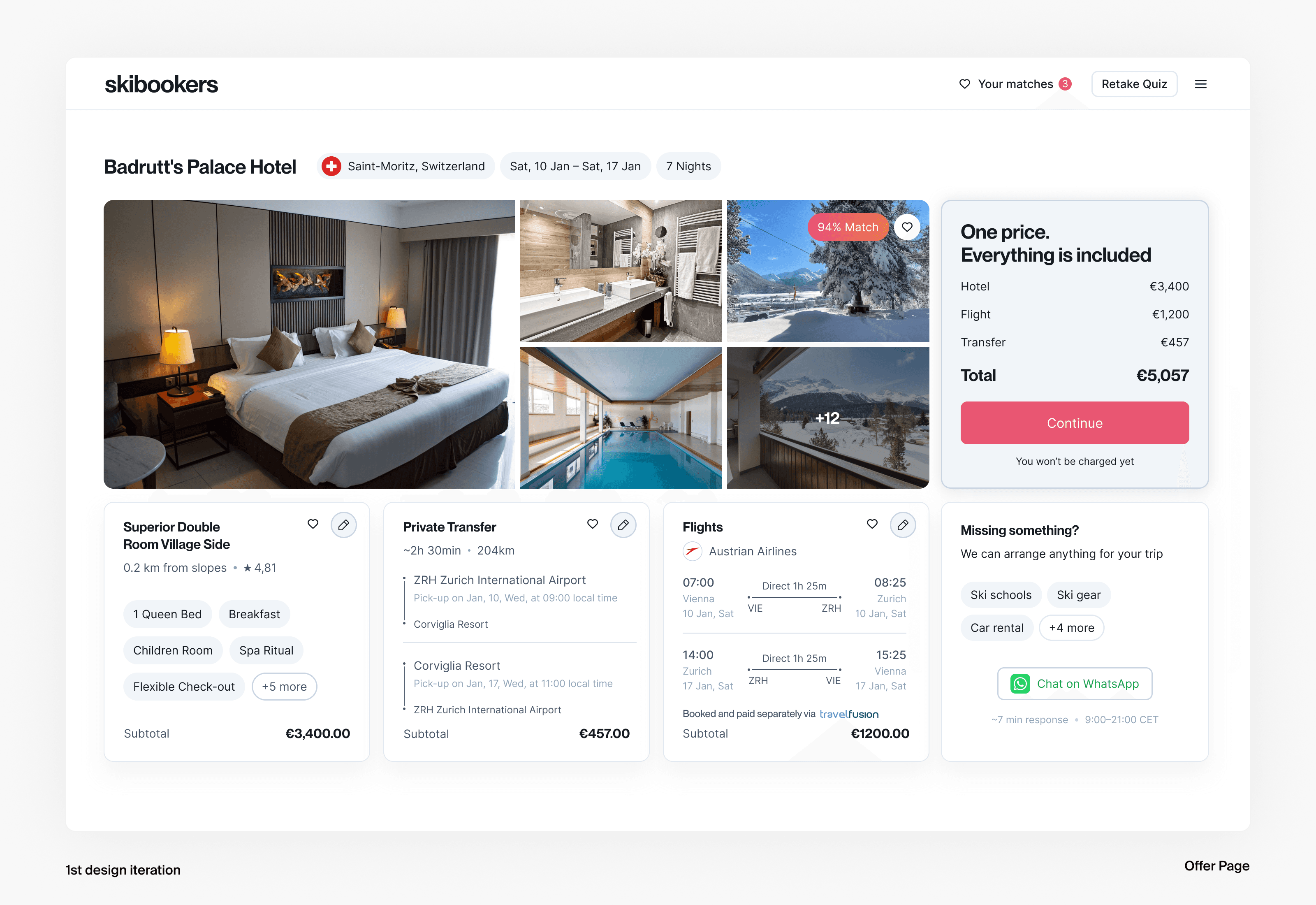
2.1 An internal testing (soft-launch)
The target audience: the holding company in Slack, around 200 team members
Launched UX testing on 13 people from Europe, not related to Skibookers and holding*
Technical audit with the outsource consultant
*See the quotes in Appendix
Internal testing
Full UX research findings
Researcher: Ksenia Gorbatova, n=13, December 2025
The December launch was cancelled.
The new design.
Skibookers is on live
CTO
New
Product Manager
New
The new launch date
3.1 First attempt: incremental updates
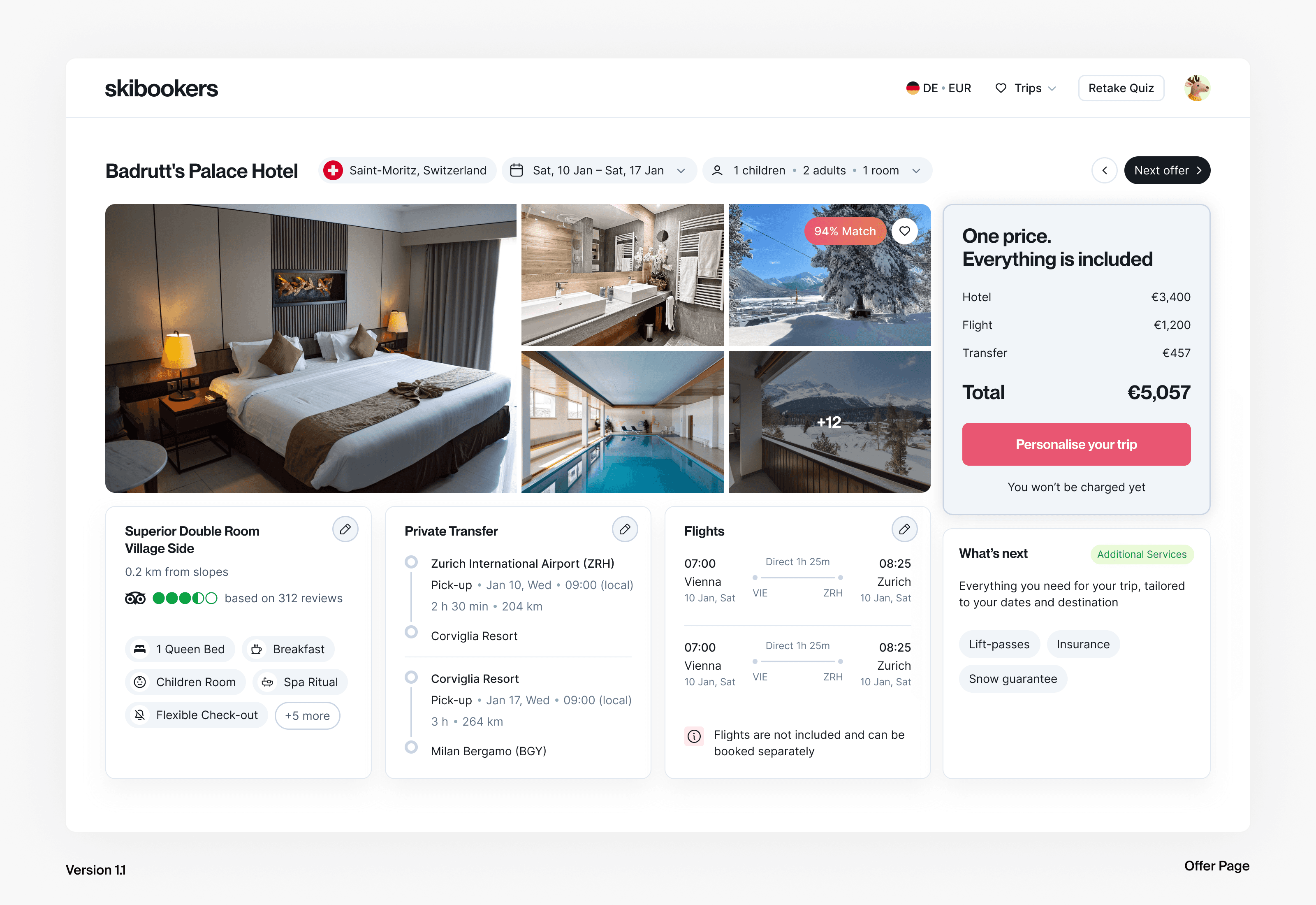
I made incremental improvements to the marketplace. Added editable pills for location and dates, and horizontal scroll for offers.
Goal: test if smaller changes could move conversion before committing to a full rebuild.
6.25%
3.2 The full redesign
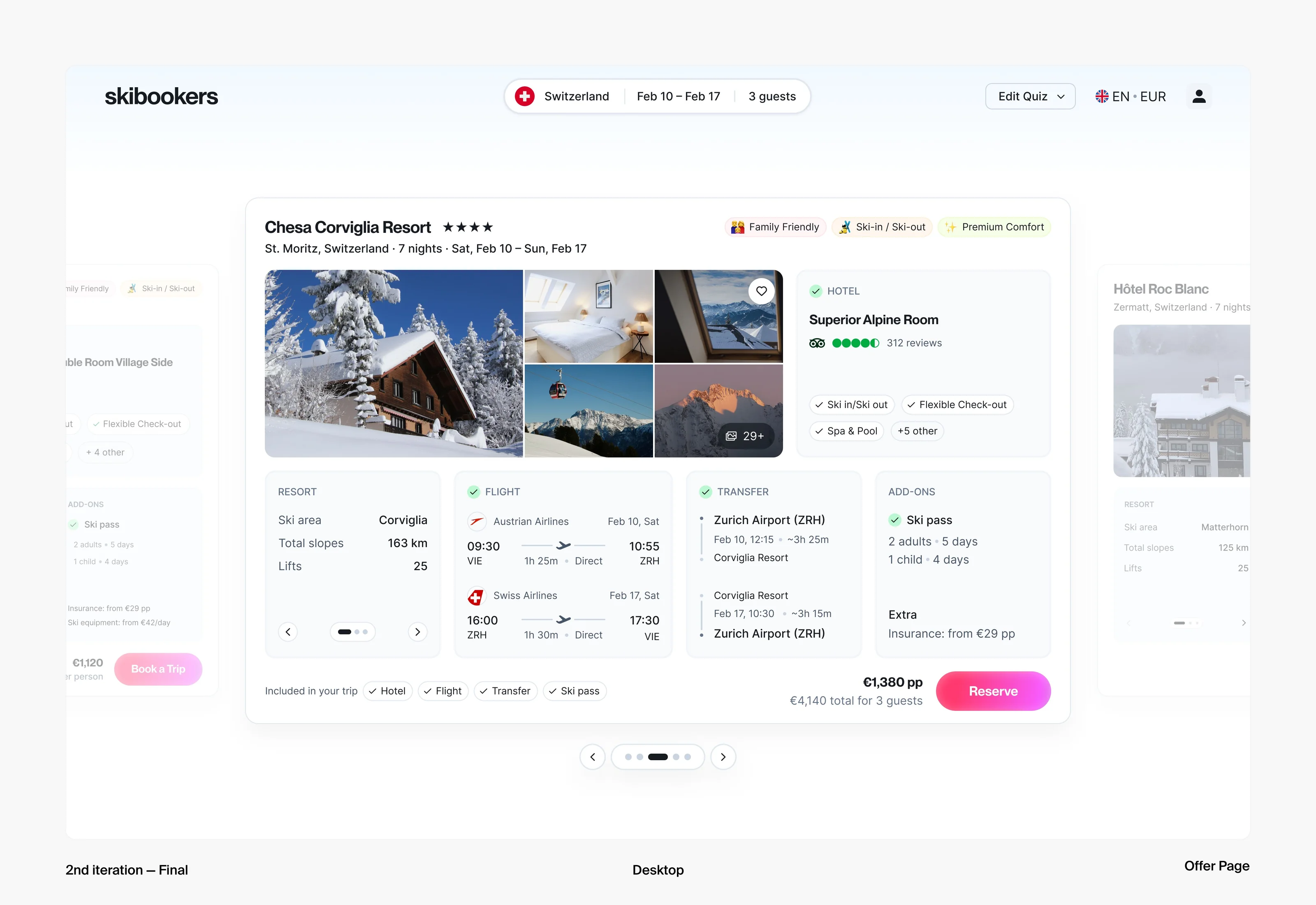
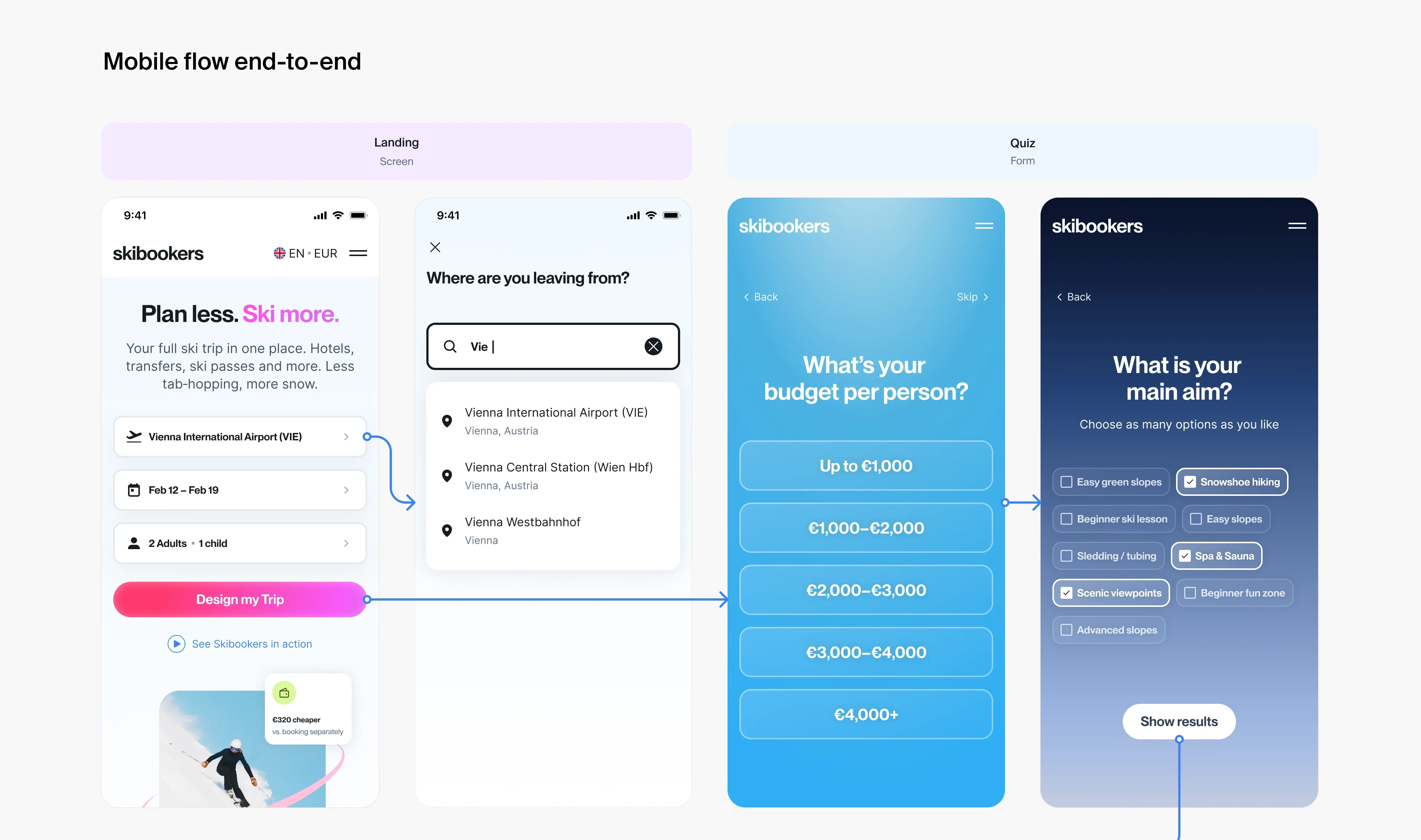
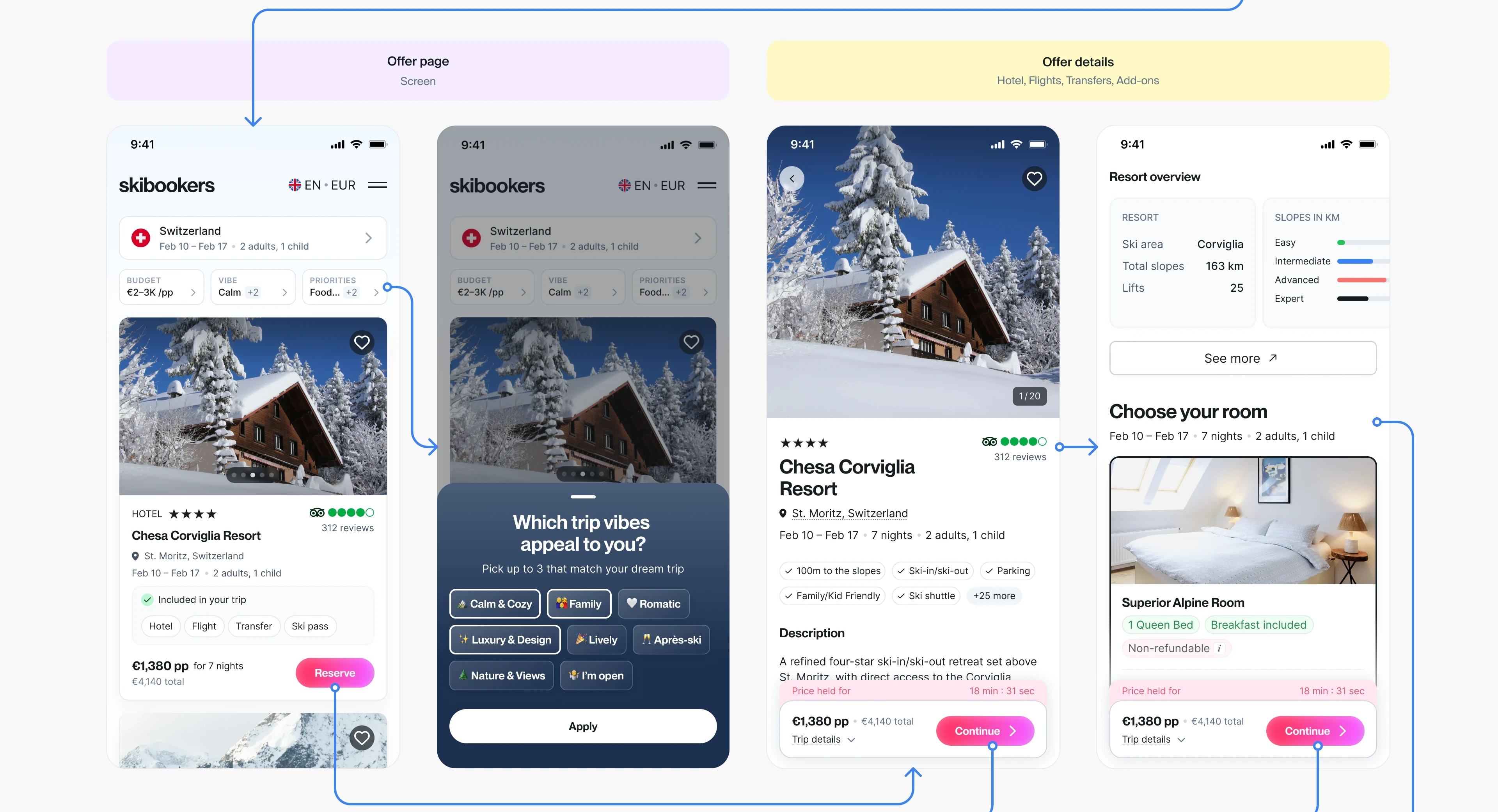
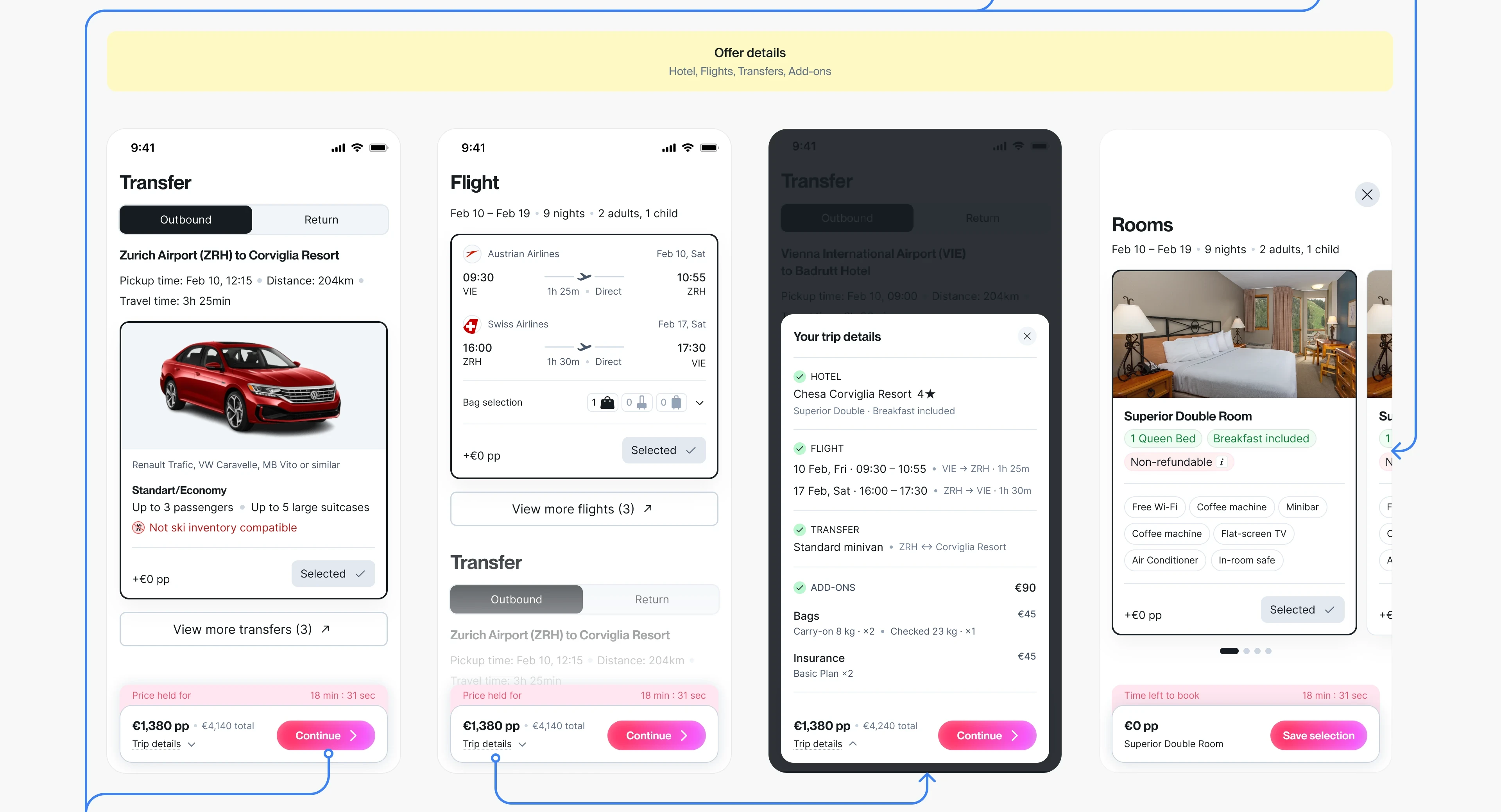
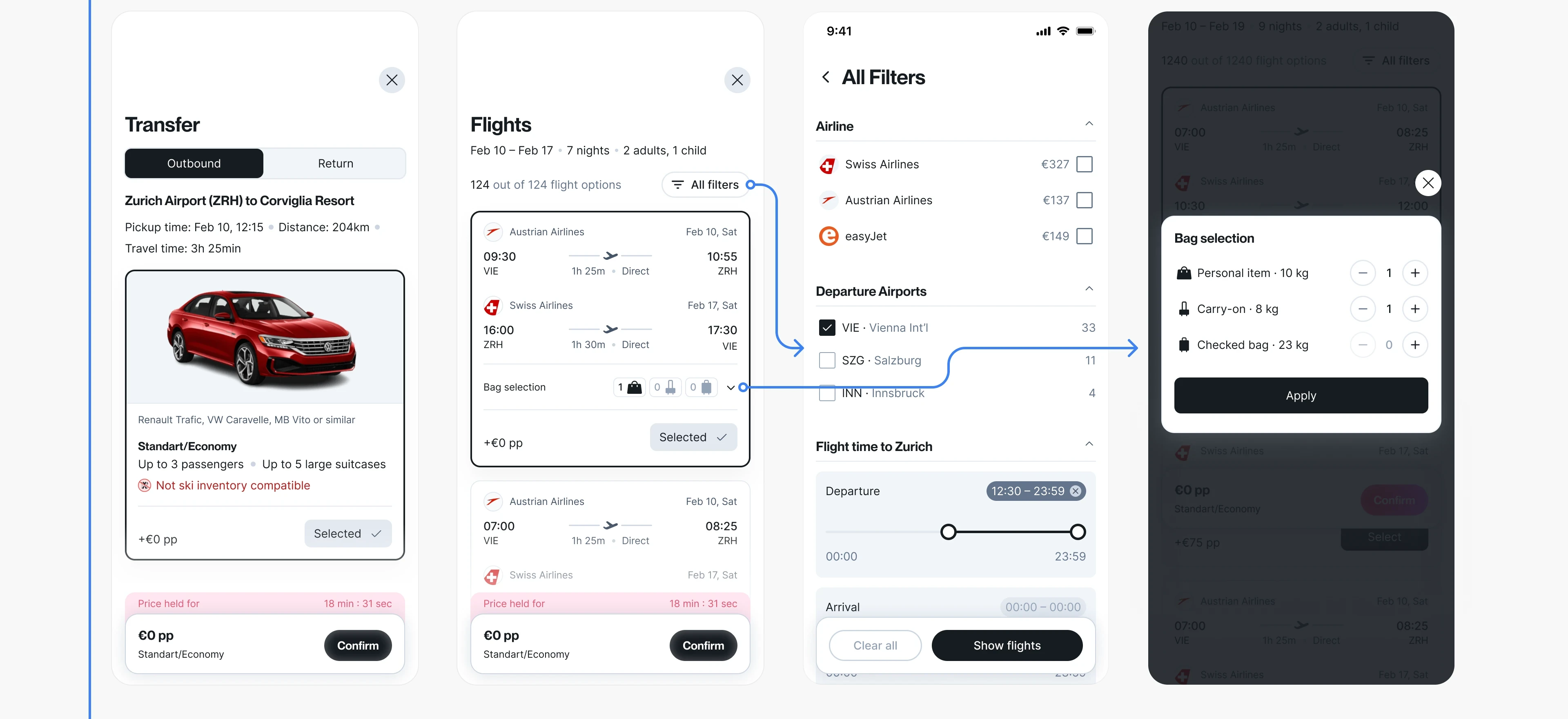
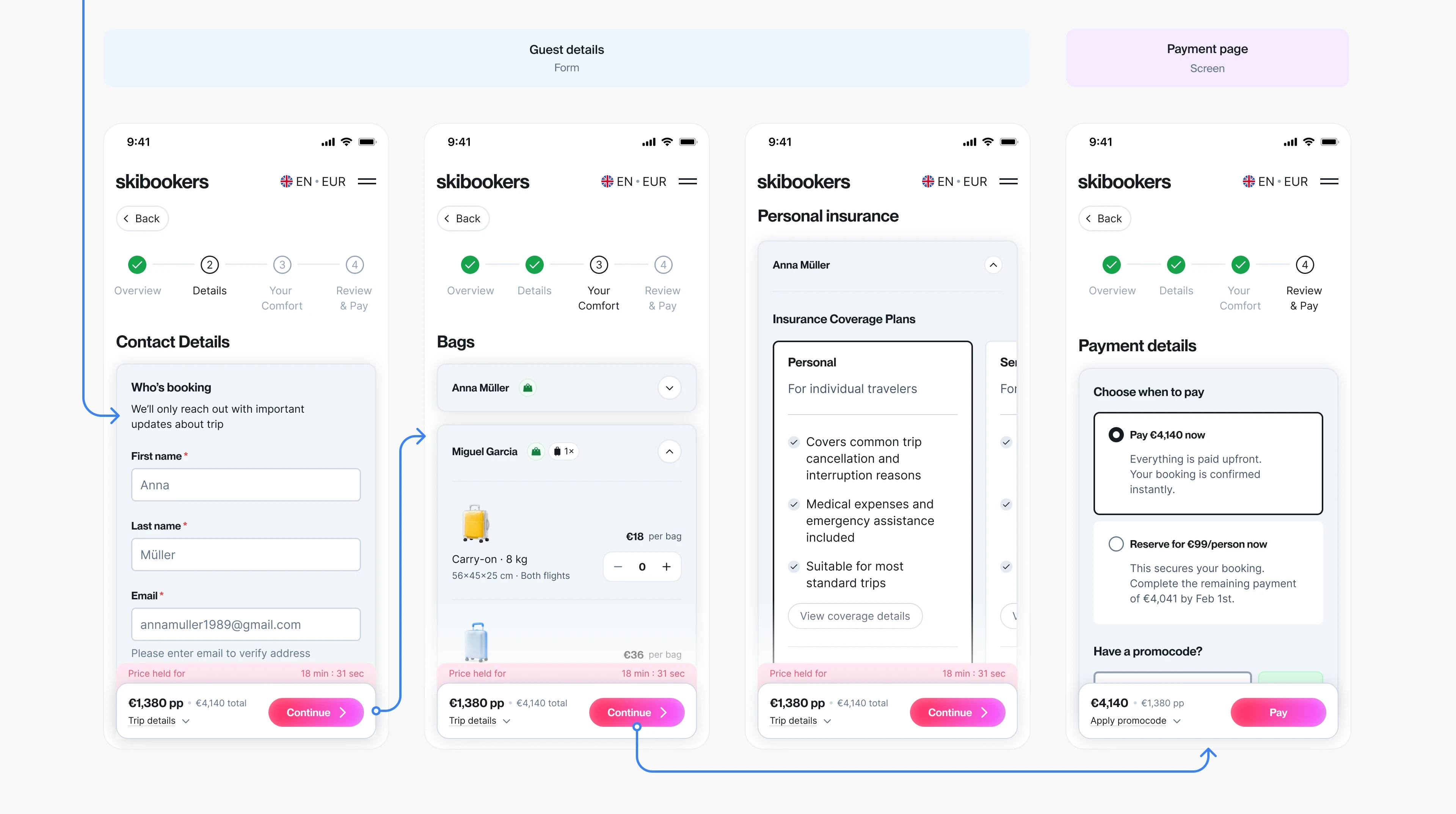
3.3 What changed compared to v1
3.4 Outcomes
After the full redesign, conversion from offer page to user details increased 3×
6.25%
Before redesign
18.5%
After redesign
Conclusion & Reflection
4.1 Key numbers
2
Launches in 10 months and 1 major cross-platform redesign.
89%
Of quiz starters reached the offer page. Format validated by research.
×3
Conversion lift from offer page to user details.
6.25% → 18.5%.
0 sales
Business factors, not design: pricing, supply, audience.
In April, Skibookers pivoted. In May, the project was paused.
4.2 What I would do differently
Validate the business model earlier. We improved quiz completion to 89% and offer-to-reserve conversion to 18.5%, but this did not lead to sales. I would validate willingness to pay and the full path to purchase before optimizing the funnel.
Test the core idea earlier. Our main bet was to give users one personalized offer. We tested the flow, but not the core idea early enough. I would prototype and test whether users understand and trust a single recommendation before building the full experience.
Delegate system work earlier. As the first designer, I was covering product, brand and design system work at the same time. I spent too much time refining the system. I would delegate it earlier and keep my focus on product decisions.
4.3 Trade-offs
Simplicity vs. user control. Our business bet was one curated recommendation. For that, we needed a strong recommendation system, which was still being built. One offer made the decision simpler and fit our idea of a personalized trip, but gave users little control on a high-value €3-5k booking if the recommendation was wrong. Multiple options gave users more control, but brought back the complexity we were trying to remove.
I prototyped a multi-offer version in Lovable to explore that risk and kept it as a fallback. The team decided to test the single-offer approach in the soft launch. Qualitative research in December showed that users wanted to compare offers, and Amplitude data from February-April confirmed the same pattern.
So we moved to a multi-offer page in the final design.
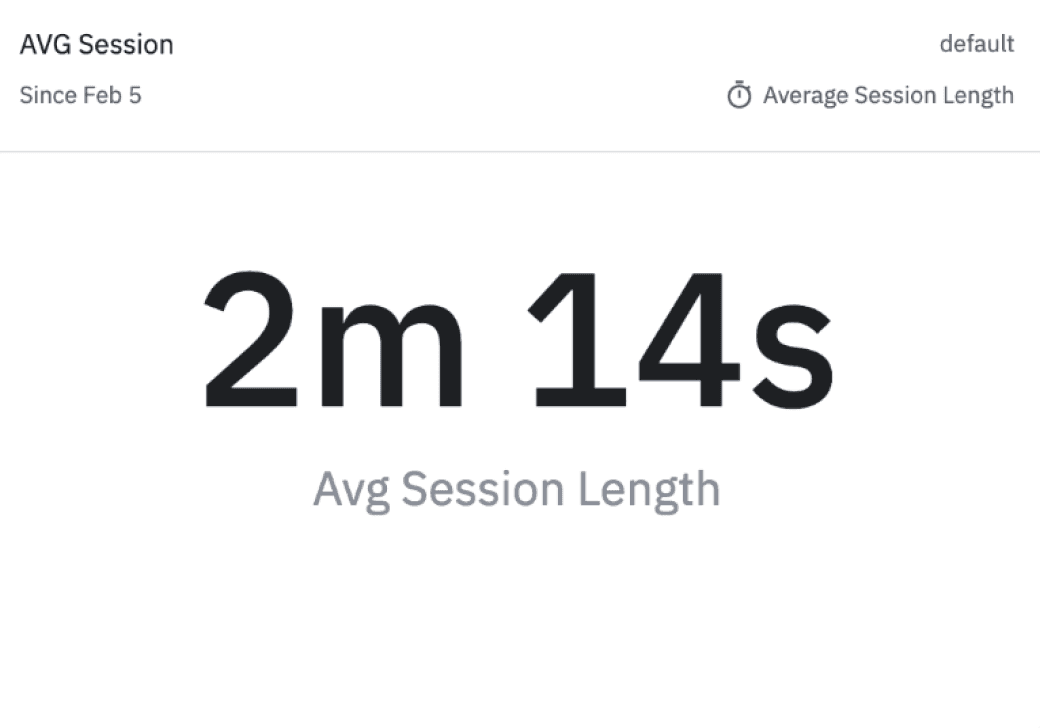
Time spent

Product overview

Funnel (18 Feb – 3 Mar)

Device categories


UX Research Insights
Recommendations missed user inputs
«Okay, well that's probably, definitely a negative. Haven't been able to find anything for my preferences, which isn't ideal.»
«There are no hotels available for my current preferences.»
«Oh, this one is twice as expensive.» (about an offer that came back well above the stated budget)
«It also shows me something about the airport here, which is not relevant for me.» (about a flight pushed onto a user who lives near the resort and drives there)
«Mainly look for location and the amount of slopes, which it didn't have.»
Users wanted comparison, not commitment
«I would like others to choose from because now I know what I can get for a bit more money and what I will get for less money.»
«[I suggest] much more options to choose from… comparable… so I can make a more informed decision.»
«I think one best match coupled with other options.»
«I don't like the fact that I have to click the button for next offers. You could have made this sort of three or four… on each page.»
Looks good, doesn't deliver
«The flow is good, but there are some serious problems… check out only then told that there was no [hotel] available… thought waste of my time.»
«It is a bit naughty though, because it says that one price, everything is included, but then you've got your lift passes, insurance and snow guarantee at the bottom. So it's kind of a little bit misleading.» (about the "all included" promise that falls apart on the results)
«I would still need to check out their website and some more, do some more research.» (despite the polished presentation, the product doesn't close the decision)
«Modern design, much too much content» and «There's a quiz, but then you've got all that in your face and I don't understand it. It's really confusing.»
Researcher: Ksenia Gorbatova, December 2025
Contact
Pavel Schneider © 2026